XTP Series Residual Gas Analyzer
Residual gas analyzer with an integrated computer — continuous process monitoring without a host PC.
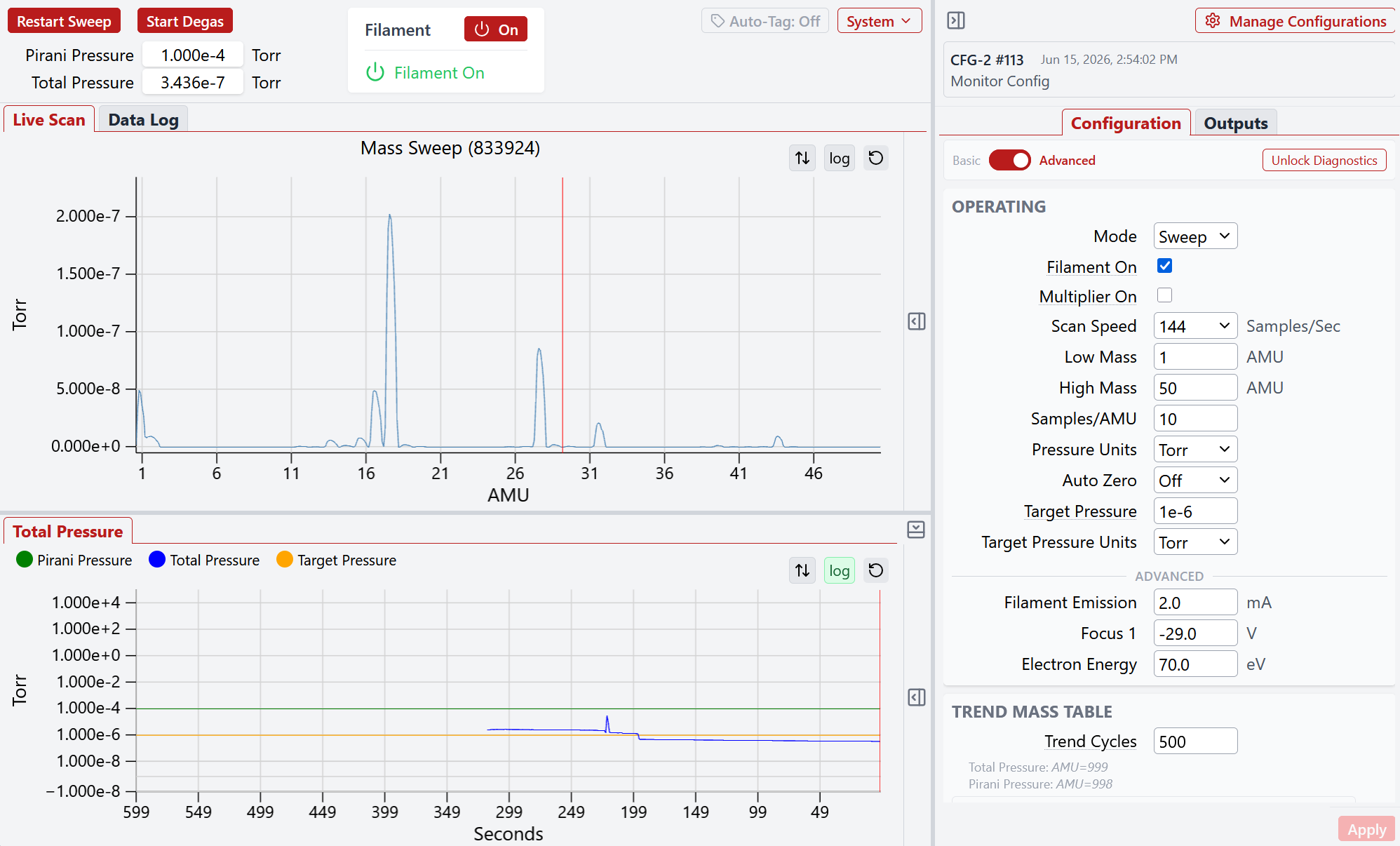
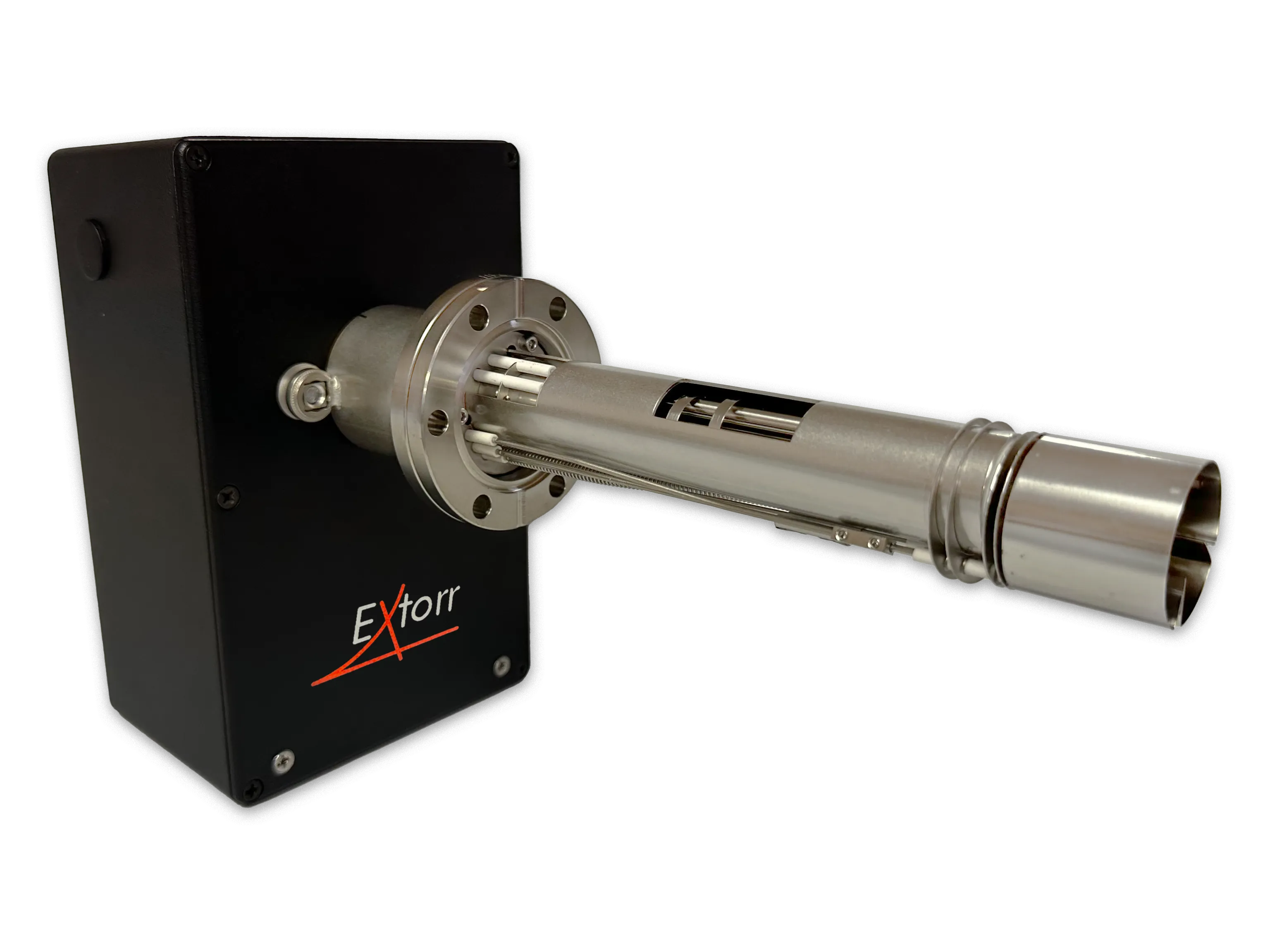
The XTP Series Residual Gas Analyzer (RGA) measures both total pressure and the partial pressures of the gases left in a vacuum system, using a multi-gauged quadrupole probe with built-in Pirani and ion gauges. A computer is built into the instrument, so process monitoring runs continuously with no host PC, years of data are held on board, and the full interface is available over the network or from a monitor plugged straight into the unit. Used for continuous process monitoring, leak testing, pump-down and bakeout monitoring, vacuum diagnosis, and gas and contaminant identification.
Ordering Information
Select configuration| Part Number | Configuration | Domestic Price | ||
|---|---|---|---|---|
 | XTP-100 | 100 amu, Faraday cup | $5,950 | |
| XTP-100M | 100 amu, Faraday cup and Electron Multiplier | $7,550 | |
| XTP-200 | 200 amu, Faraday cup | $6,950 | |
| XTP-200M | 200 amu, Faraday cup and Electron Multiplier | $8,550 | |
| XTP-300 | 300 amu, Faraday cup | $8,350 | |
| XTP-300M | 300 amu, Faraday cup and Electron Multiplier | $9,950 |
Overview
Monitoring that never stops
Process monitoring runs continuously on the instrument itself, whether or not anyone is logged in and whether or not a host machine is switched on. The 1 TB onboard store holds over ten years of continuous data at typical scan speeds.
When something goes wrong you can look back at what the chamber was actually doing, and — more usefully — compare it against previous process runs or experiments to see what changed.
Use it over the network, or straight from a laptop
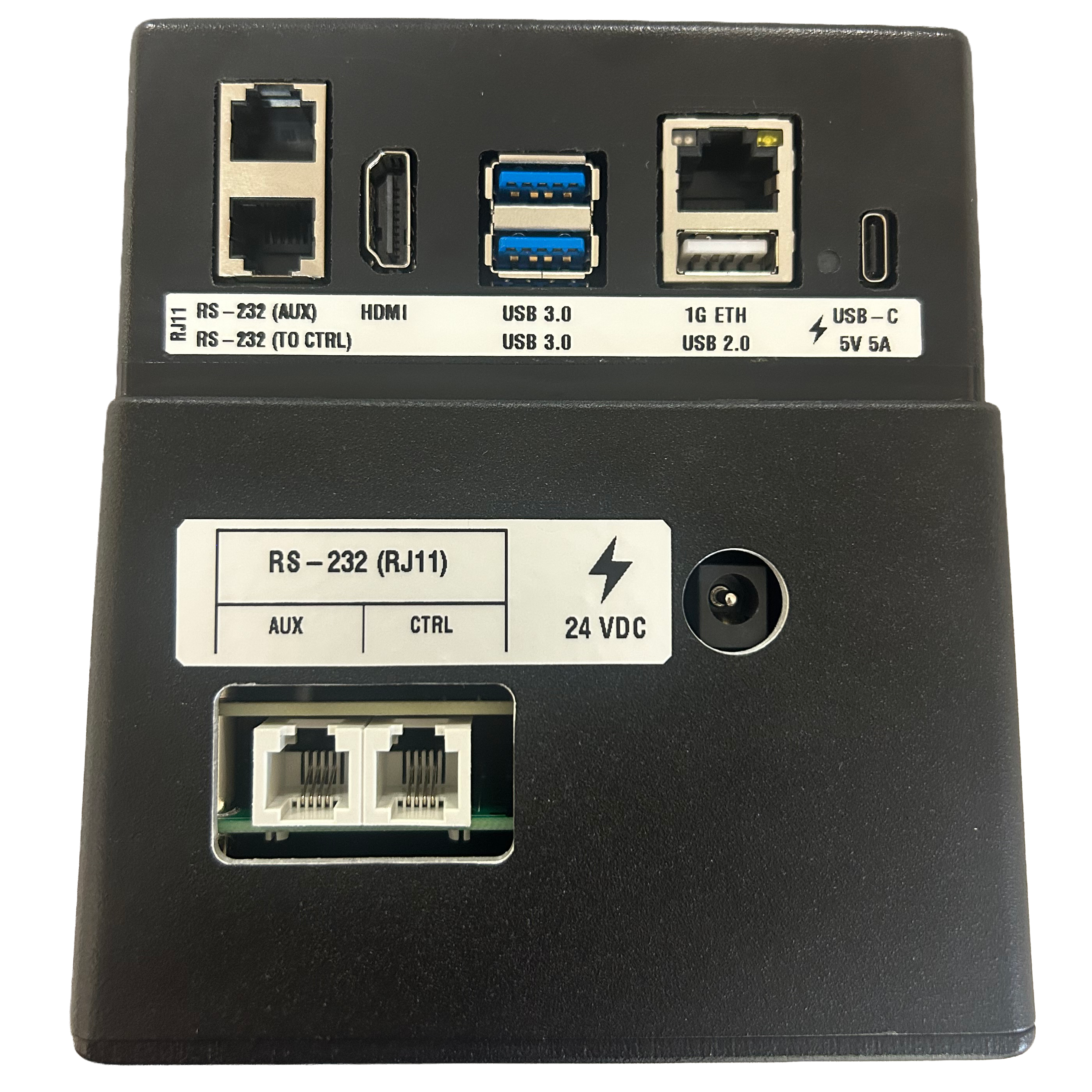
Ethernet and WiFi are built in and the whole interface runs in a browser, so any computer that can reach the instrument can drive it — nothing to install, on any machine, including someone else’s. A monitor plugged into the unit is one way to work with it, not the only one.
It also does not have to join your facility network. Connect a laptop directly to the instrument and it announces itself, so you can browse to it by name without a switch, a DHCP server, or a ticket with IT. Process data stays off the corporate network entirely when that matters.
No host computer or Windows PC needed
If the network is not an option — an air-gapped tool, a locked-down facility, or a chamber nowhere near a desk — plug an HDMI monitor, a keyboard and a mouse straight into the instrument and work on it there. Nothing to install on a PC, no drivers, and no operating system for IT to approve.
The most stable single quadrupole RGA you can buy
The RF generator is engineered to the limits of what the physics allows, and stability is what that buys you. Extorr systems typically run for years without drifting out of calibration or needing to be retuned. For anyone building an instrument or a process around an RGA, that is usually the deciding factor: the measurement you take tomorrow is comparable to the one you took today.
Three instruments in one probe
A Pirani gauge sits in the base of the feedthrough and a Bayard-Alpert type ion gauge is built into the ionizer, each with its own amplifier. You get total pressure from atmosphere to UHV and partial pressures from the quadrupole, on one 2.75" CF port. The gauges also act as a fail-safe interlock: the filament and electron multiplier are shut down before a pressure excursion can damage them, and you can leak check at any pressure, not just below 10-4 Torr.
A measured total pressure, not a derived one
Many RGAs report total pressure by adding up the partial pressures they measure. That sum inherits every error in the spectrum, and it decays along with the ionizer as it ages.
The XTP measures total pressure with a genuine Bayard-Alpert type ion gauge built alongside the ionizer, with its own collector and amplifier. It runs at much higher ion energies than the 5–10 eV the quadrupole needs, which makes it far less sensitive to ionizer aging. It is an independent measurement rather than a derived number — and it gives you an on-board reference to calibrate the partial pressures against as the ionizer ages.
Filaments that survive mistakes, and that you replace yourself
The filament assembly is thoria coated iridium, and it is protected against vacuum excursions by both the Pirani and the ion gauge. The most common way to kill an RGA filament — running it into a pressure it shouldn't see — simply doesn't happen here, because the gauges shut it down first.
Snap-in electron multiplier
The multiplier snaps in and out by hand with a clean glove: no tools, no probe disassembly. The CCU meters out only as much current as it needs, avoiding the destructive channel current that kills multipliers during an overpressure event. Covered by a one year warranty against failure.
More about the electron multiplier →Compact, fan-less, self-supporting
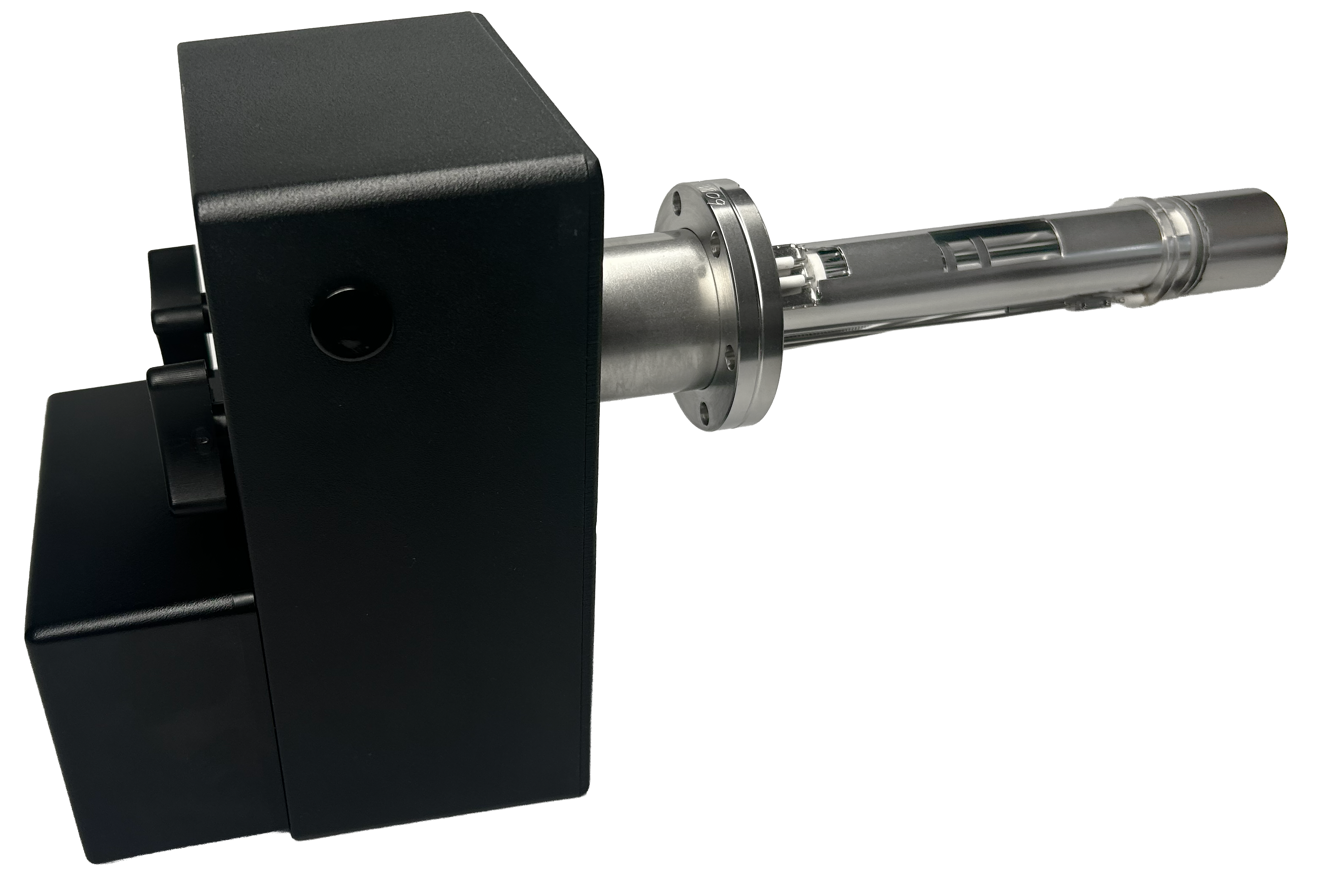
An efficient RF generator design means no cooling fan — no vibration, no dust drawn into high voltage electronics, and one less thing to fail in a clean room. The probe is rigid enough to stand on its own, so it needs no support nipple and can reach well into the chamber. The CCU extends 8" from the flange face and detaches with two thumb screws for bakeout.
Diagnosable without shipping it back
The software exposes a full diagnostics page for the probe and electronics. Send us that log and we can usually tell you exactly what is wrong — over 90% of faults are resolved by phone or email. Support comes from the people who designed the instrument.
Gas that is not already in vacuum
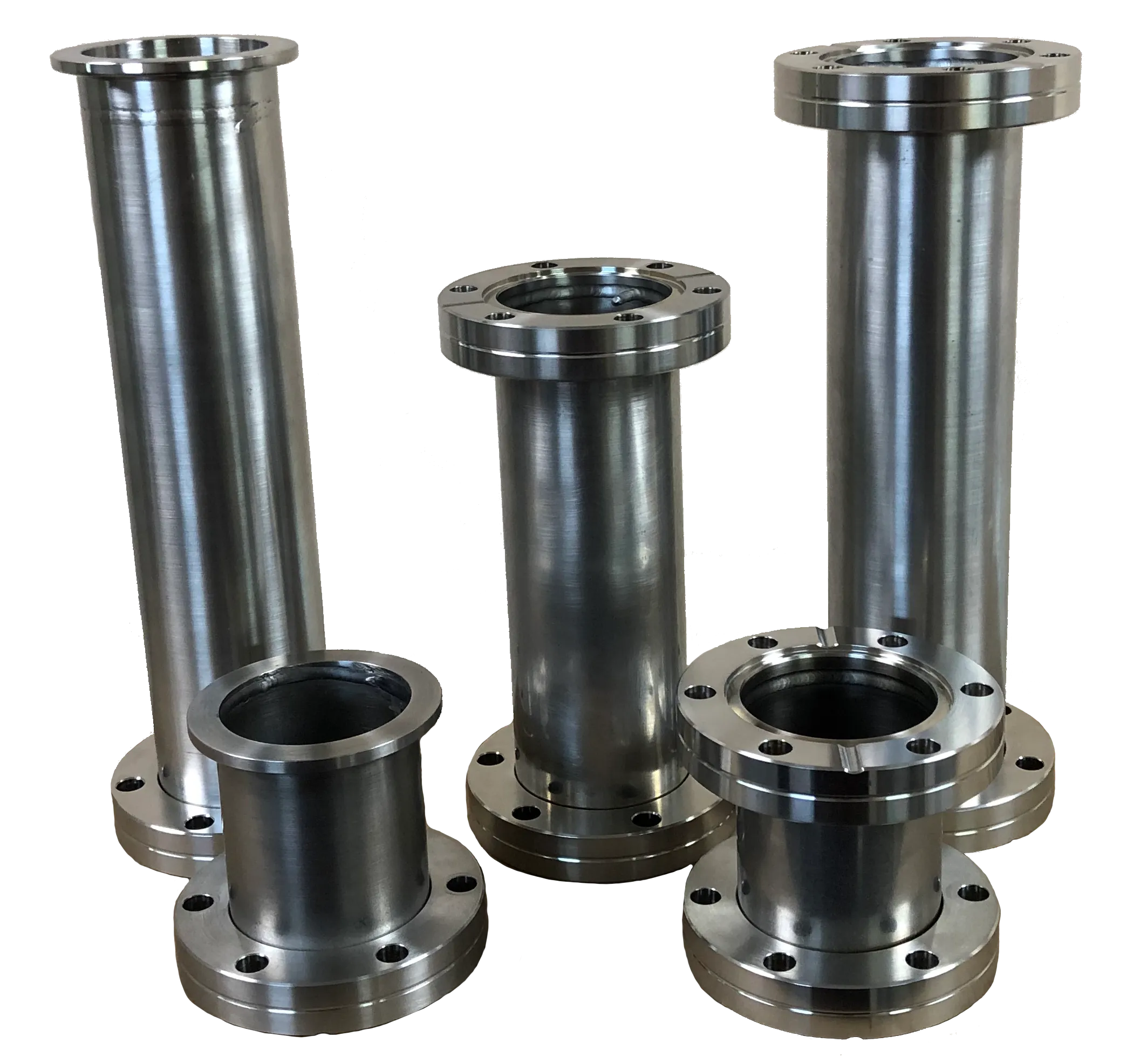
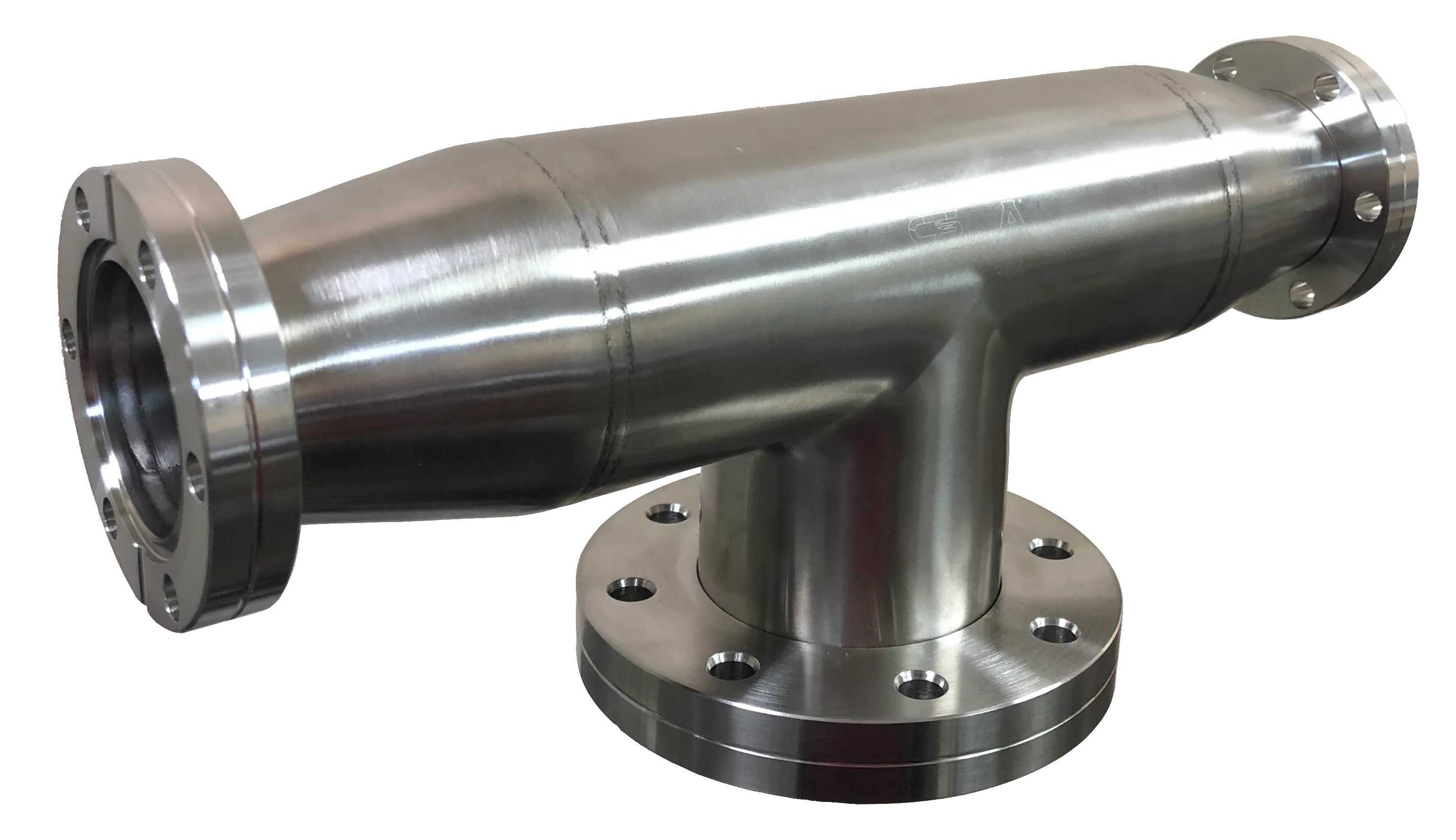
If what you want to measure is not already under vacuum, the analyzer can be mounted in a pumped manifold of its own, with the gas admitted through a restriction.
We supply the parts for this: manifolds, sampling inlets, capillary, and the turbo pumping station. Design a Custom Mass Spectrometer walks through the design process and is worth reading before you order.
Specifications
| XTP-100 | 1-100 amu Faraday cup (FC) |
| XTP-200 | 1-200 amu Faraday cup (FC) |
| XTP-300 | 1-300 amu Faraday cup (FC) |
| XTP-100M | 1-100 amu Faraday cup (FC) and Electron Multiplier (EM) |
| XTP-200M | 1-200 amu Faraday cup (FC) and Electron Multiplier (EM) |
| XTP-300M | 1-300 amu Faraday cup (FC) and Electron Multiplier (EM) |
| Detector type | Dwell | Minimum detectable partial pressure (Torr) |
|---|---|---|
| Faraday Cup | 200 ms | 2.4 x 10-12 * 7.2 x 10-12 ** |
| Faraday Cup | 5 seconds | 5 x 10-13 * 1.5 x 10-12 ** |
| Electron Multiplier | 200 ms | 1 x 10-14 * 3 x 10-14 ** |
| Electron Multiplier | 5 seconds | 2 x 10-15 * 6 x 10-15 ** |
* Measured by calculating one standard deviation of the baseline noise divided by the sensitivity for nitrogen.
** Measured by calculating three standard deviations of the baseline noise divided by the sensitivity for nitrogen.
Parts
Common reorders — ordered separately from a system| Part Number | Configuration | Domestic Price | ||
|---|---|---|---|---|
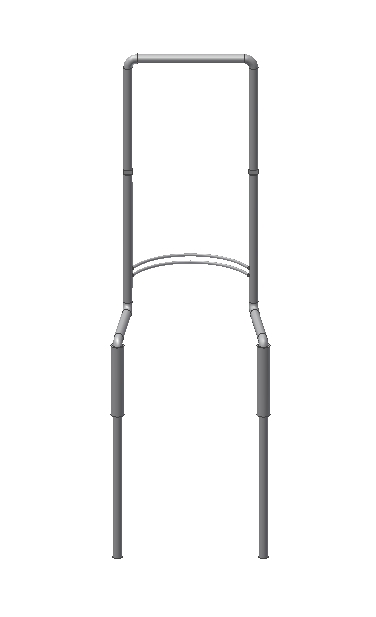 | XTDUALFIL | Dual thoria coated iridium filament, XT and XTP series. Must use with XTIONIZER | $300 | |
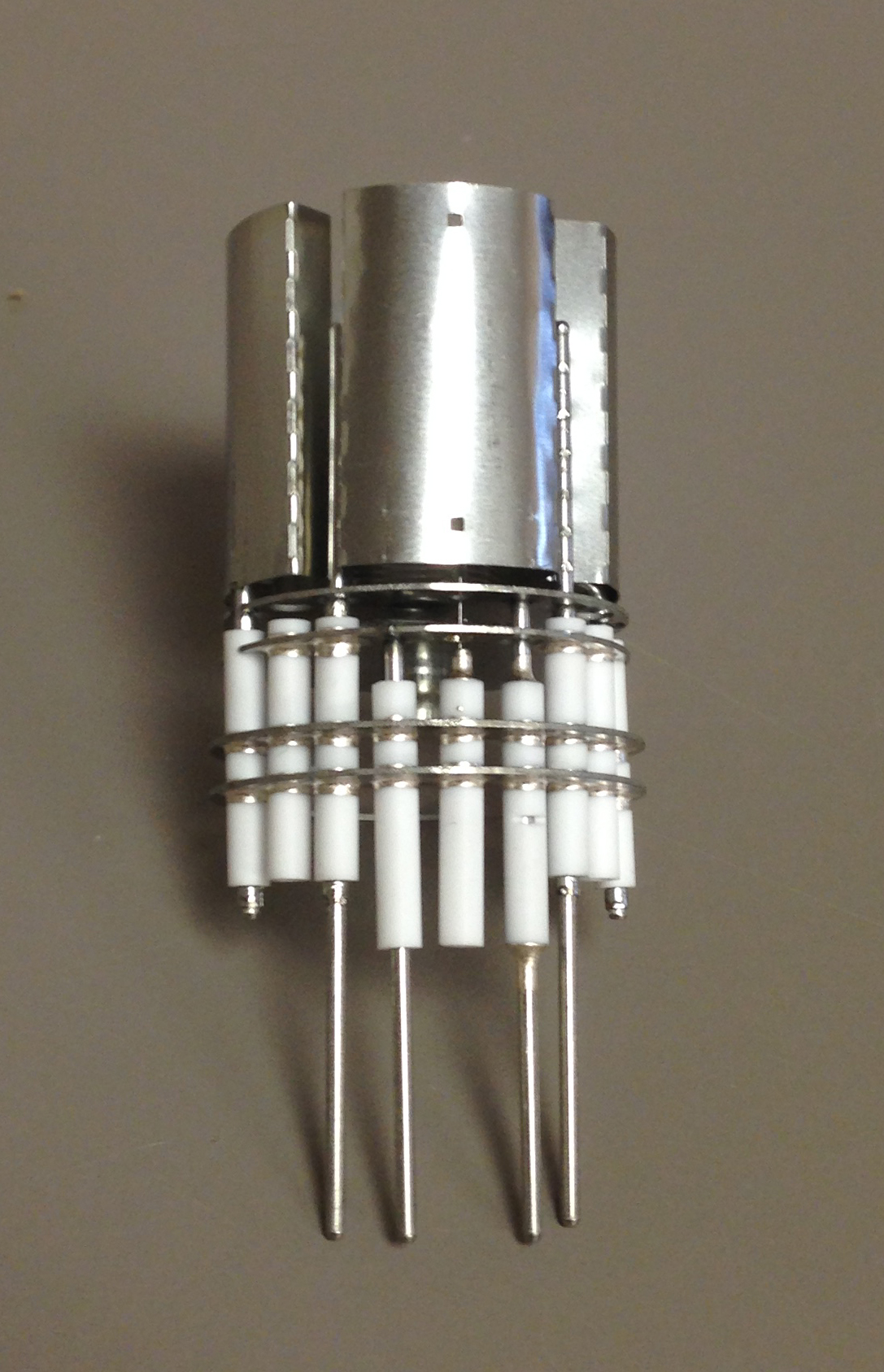 | XTIONIZER | Ionizer assembly for use with dual filaments (XTDUALFIL), XT and XTP series | $500 | |
 | XTMULT | Electron multiplier for XT and XTP series, M models | $1,600 |
Related Products
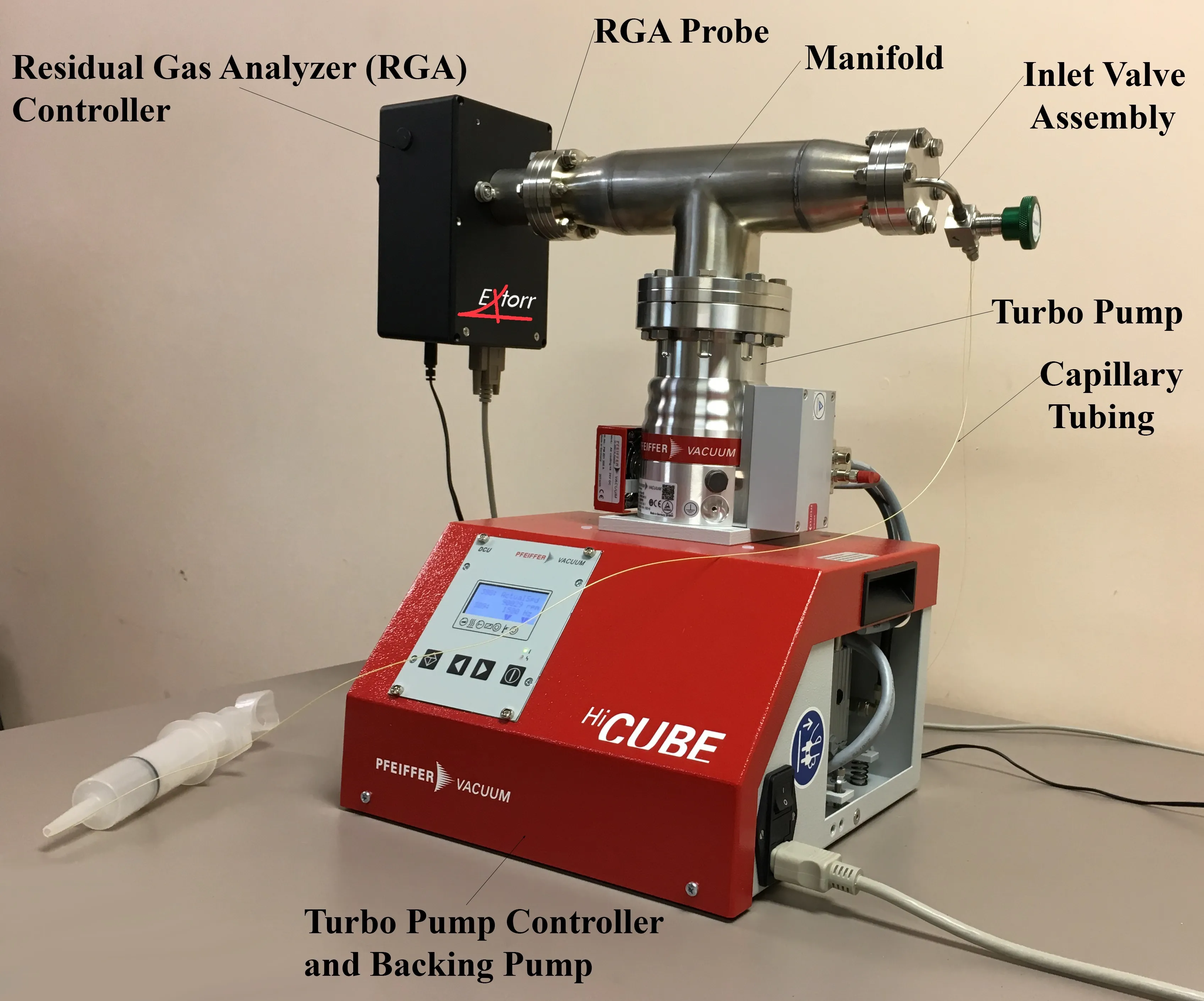
Design a Custom Mass Spectrometer
Manifold, pump and inlet — sampling from outside an existing vacuum, and keeping the probe healthy.
XT Series Residual Gas Analyzer
The XT Series Residual Gas Analyzer from Extorr offers exceptional performance and value. Each system comes complete with built-in Pirani and Ion gauges.
Probe Manifolds